




Fast, professional, restoration when you need it most.
Proudly serving Las Vegas and surrounding communities.
Boulder City sits on rocky high ground between the Eldorado Valley and Lake Mead, and its homes are among the oldest in Southern Nevada. Many were built in the 1930s for Hoover Dam workers, with remodels and additions layered on top over the years. That mix of original construction and later updates creates hidden weak points where water, smoke, and mold can spread before anyone notices.
Ironclad Response has spent over a decade helping Clark County property owners recover from sudden damage. We are locally owned, IICRC-certified in water damage restoration, applied structural drying, mold remediation, and fire restoration, and we answer emergency calls at any hour. From the first phone call through final reconstruction, one team stays on the job.

Water damage is the most common call we take here, usually from a failed supply line, a slab leak, or storm runoff that pushes into a garage. We handle emergency water extraction, applied structural drying and dehumidification, and moisture detection and monitoring so nothing stays wet behind a wall or under a floor.
We also restore fire and smoke damage, remediate mold, and clean and sanitize sewage backups. Storm, flood, wind, and hail damage all fall under the same roof, along with asbestos testing and abatement, which matters more in this town than in newer parts of the valley because older ceilings, floor tile, and pipe insulation can contain it.
Our crews handle biohazard decontamination and crime scene and trauma cleanup as well, for both homes and commercial buildings. Reconstruction happens in house, so the same company that dries the structure also puts it back together.
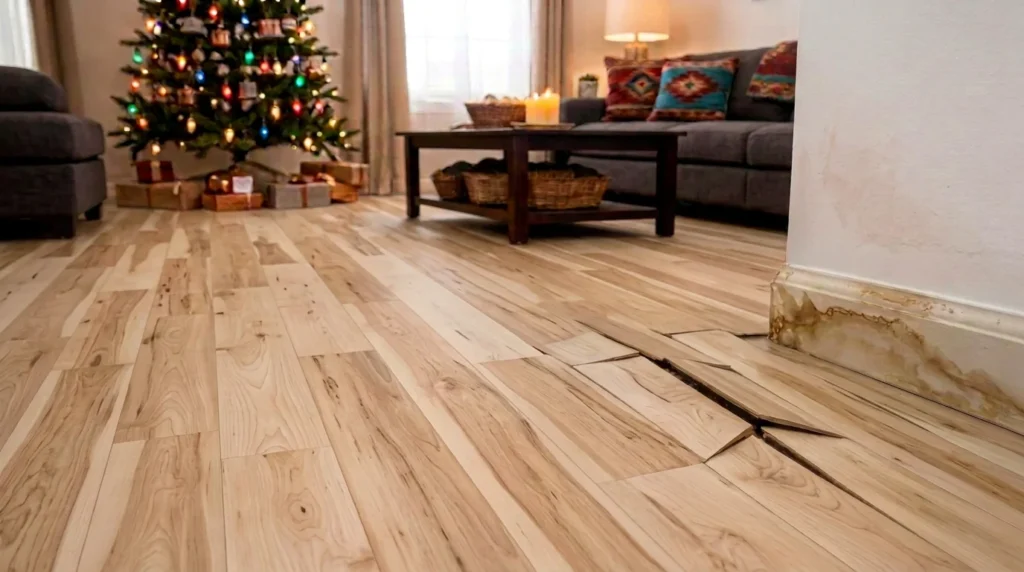
Damage in an older Boulder City home usually announces itself in small ways long before anything visibly fails. Keep an eye out for these changes.
When two or more of these show up at the same time, schedule an inspection before the affected area grows.

Weather here does its damage in short, intense bursts. Monsoon storms from July through September drop heavy rain on hard desert soil and bare rock, and that water runs downhill fast toward homes built into the slopes above Lake Mead. Yards flood, garages take on water, and a low-lying room can be saturated in under an hour.
Wind is the other constant. Air funnels through the Eldorado Valley with enough force to strip shingles, pull flashing loose, and drive rain sideways under roof edges. Once the envelope opens, water moves into the attic and soaks down through insulation.
Indoors, the age of the housing stock drives the rest. Original galvanized plumbing, older water heaters, and rooftop evaporative coolers all fail eventually, and a slow leak behind lath and plaster can feed mold for weeks without a visible stain. Winter nights at this elevation run colder than the valley floor, so exposed pipes occasionally freeze and split.
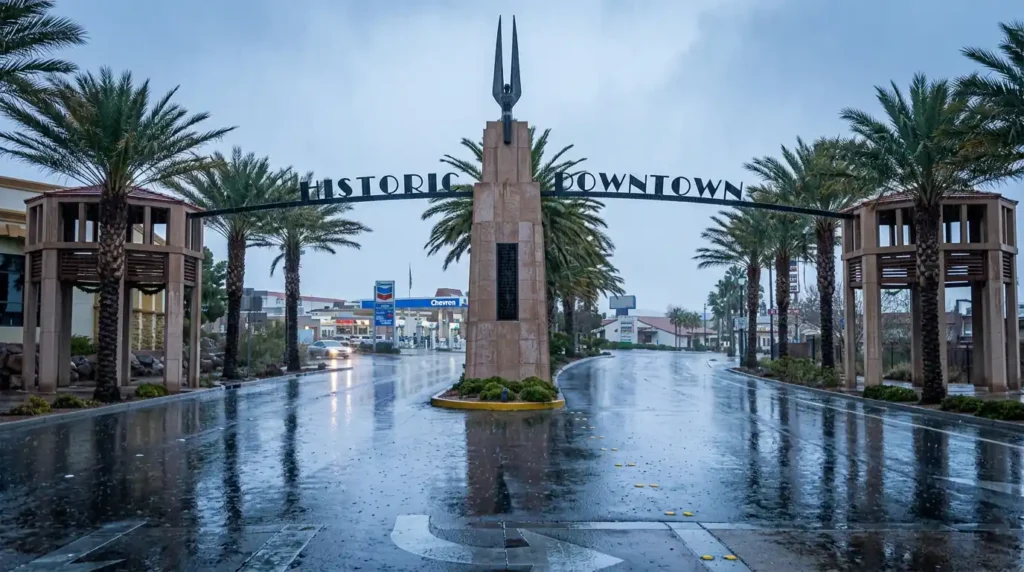
A homeowner named Dennis called us from the Historic District after a monsoon storm sent water down his street and into the back of his 1930s bungalow. He had mopped the tile himself and figured the problem was handled, but the room still smelled damp two days later.
When our crew arrived, moisture readings showed the water had wicked several feet up the plaster and soaked the wood subfloor in the hallway. We extracted what was left, set containment, and ran structural drying equipment while checking readings each morning. Because the home dated to the dam era, we tested the flooring adhesive for asbestos before pulling up any material.
Nothing had to be gutted. The plaster dried in place, the subfloor was saved, and Dennis had his hallway back with no lingering odor and no mold growing behind the walls.

Property owners here call us back for reasons that matter most when the situation is urgent.
One team stays with the property from the first emergency call until the last repair is finished.
We answer calls around the clock and dispatch as soon as we have your address. Boulder City is a short drive from the rest of our Clark County service area, so crews arrive quickly to stop the damage from spreading.
Often yes. Homes built before the late 1970s may contain asbestos in floor tile, ceiling texture, or pipe wrap. We test suspect materials before anything is removed so the work stays safe for everyone in the building.
Most jobs run three to five days, depending on how much water was absorbed and which materials are involved. We take moisture readings daily and only pull equipment once the structure reaches dry standards.
Yes. Mold needs a moisture source, not humid air. A slow leak under a sink, behind plaster, or beneath a slab creates enough dampness to support growth even during the driest months of the year.
We do. Our team carries the job from extraction and drying through drywall, flooring, paint, and final reconstruction. You never have to hand the project off to a second company partway through.