



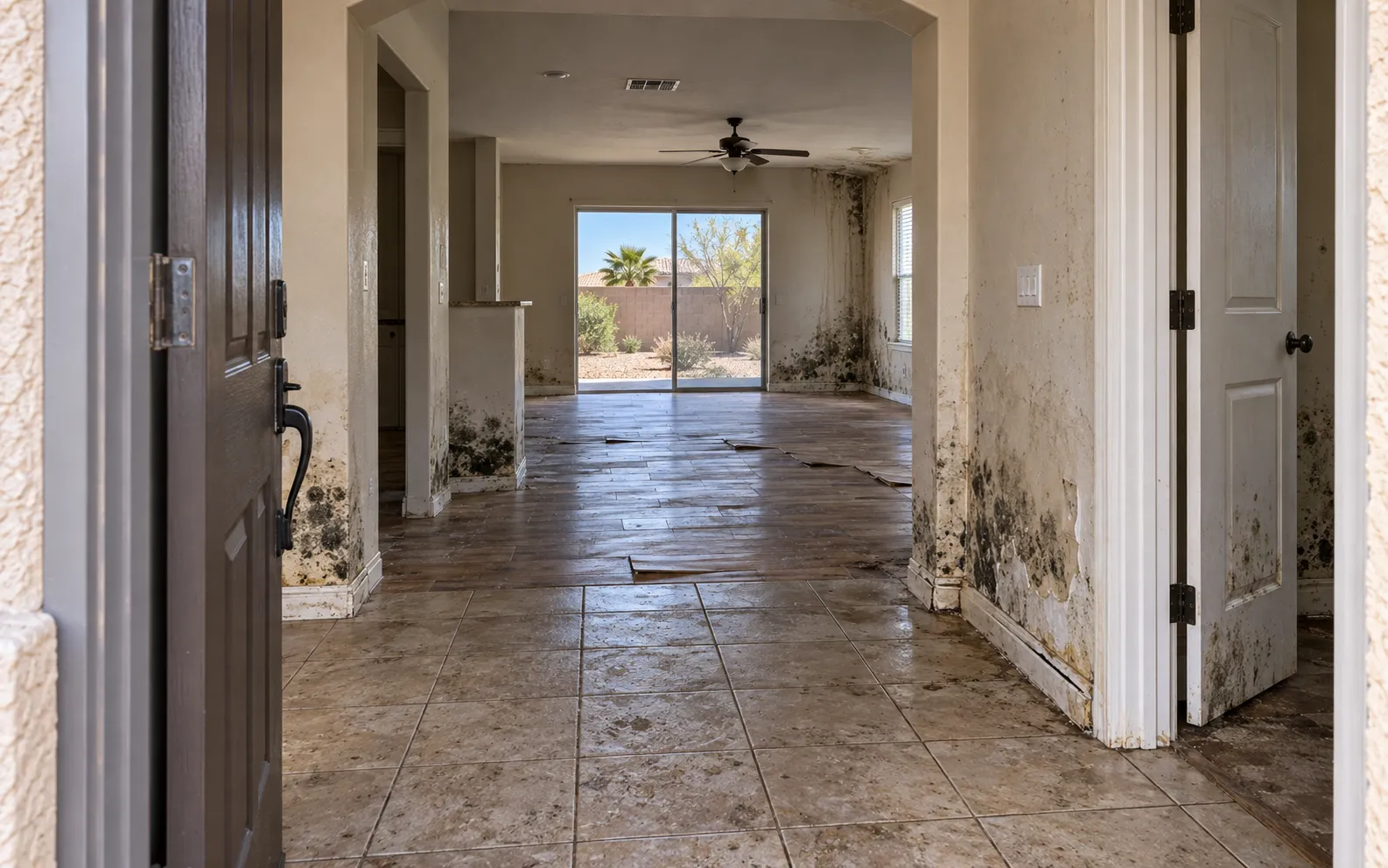
Mold is one of those problems that rarely announces itself clearly. By the time most Henderson homeowners notice something visible, the growth has often been active for weeks, sometimes months, spreading through wall cavities, behind baseboards, and underneath flooring well out of sight.
Understanding when mold has crossed from a minor surface issue to something that requires professional remediation is one of the most important things a property owner can know. In Henderson’s climate, where warm temperatures persist nearly year-round and monsoon season introduces sudden moisture events, the conditions for mold growth are present far more often than most residents realize.
Why Henderson Homes Are Vulnerable to Mold Growth
Henderson sits in the Mojave Desert, but that dry climate does not make homes immune to mold. What it does is change the typical causes.
In more humid regions, mold often develops from ambient outdoor moisture. In Henderson and the broader Clark County area, the trigger is almost always an indoor moisture event: a plumbing leak, a slow drip under a sink, condensation from an overworked HVAC system, water intrusion through a roof or window seal during monsoon storms, or residual moisture left behind after a flood that was not properly dried.
Working across Henderson neighborhoods from Green Valley to Anthem, restoration professionals commonly see mold situations where the original water event was minor or even unnoticed. A small pipe sweat, a brief roof leak, or an appliance line drip is enough to introduce moisture into a contained space where it sits undisturbed, and where temperatures in the high 70s to 80s indoors create near-ideal conditions for mold colonization.
Mold can begin to grow within 24 to 48 hours of a moisture event under the right conditions. By the time it becomes visible or odorous, the colony is already established.
Warning Signs That Mold May Be Present in Your Home
Mold does not always look like the black patches people picture when they hear the word. It can appear in a range of colors, including white, gray, green, and brown, and it can grow in areas that are rarely inspected. Here are the signs that warrant a professional assessment.
Persistent Musty Odors
One of the most reliable early indicators of hidden mold growth is a persistent musty smell that does not improve with cleaning or ventilation. This odor is caused by microbial volatile organic compounds released as mold colonies metabolize organic materials. In Henderson homes, this smell is commonly noticed in bathrooms, laundry rooms, under kitchen sinks, and in rooms adjacent to exterior walls.
If you notice a musty odor that returns after cleaning, or that seems to intensify when the HVAC system runs, there is a strong likelihood that mold is growing somewhere inside the structure or ductwork.
Visible Discoloration on Walls, Ceilings, or Floors
Discoloration on surfaces is not always mold, but it always warrants investigation. Water staining that has changed in appearance, fuzzy or irregular growth patterns on drywall, grout, or wood, and dark spotting along baseboards or ceiling lines are all potential indicators.
Surface mold that can be wiped away with a household cleaner may seem manageable, but it is often a symptom of a larger colony growing behind the surface. Treating the visible portion without addressing the root cause and the full extent of contamination will result in the mold returning.
Worsening Allergy or Respiratory Symptoms Indoors
Many Henderson residents attribute allergy symptoms to outdoor pollen and desert dust, which are legitimate concerns in the Mojave. But when symptoms consistently worsen inside a specific room or area of the home, that pattern is worth paying attention to.
Common symptoms associated with mold exposure include:
- Sneezing, congestion, and runny nose that improve when leaving the home
- Eye irritation and watering
- Coughing or throat irritation
- Skin rashes in some individuals
- Respiratory discomfort, particularly in those with asthma or sensitivities
These symptoms alone are not proof of mold, but when they correlate with a specific indoor environment, a professional inspection is the appropriate next step.
Recent Water Damage That Was Not Professionally Dried
This is one of the most important risk factors professionals assess during mold investigations. A water event, regardless of how minor it appeared, that was addressed with fans and air drying rather than professional extraction and structural drying is a significant mold risk.
In Henderson’s warm indoor climate, moisture trapped in drywall, insulation, or subfloor materials can support active mold growth within 48 hours. By the time several days or weeks have passed, a colony can be well-established inside the structure even if the surface looks and feels dry. If your property experienced any water intrusion in the past one to two years that was not followed by professional water damage restoration and moisture verification, a mold assessment is worth considering.
Unexplained Paint or Wallpaper Issues
Bubbling paint, peeling wallpaper, and warped wall surfaces are often signs of moisture trapped behind the surface material. When this moisture is present long enough, mold typically follows. These cosmetic issues are easy to dismiss or paint over, but they are frequently a surface indicator of a deeper problem.
Water Stains With No Identified Source
A water stain on a ceiling or wall that appeared without an obvious explanation, such as a known roof leak or plumbing event, suggests that moisture is entering or traveling through the structure in a way that has not yet been identified. Until that source is found and corrected, moisture will continue to accumulate and mold risk remains active.
What Professional Mold Remediation Actually Involves
Mold remediation is not the same as mold cleaning. Many homeowners attempt surface treatments with bleach or commercial products, which can address visible growth on non-porous surfaces but do not eliminate mold from porous materials like drywall, wood framing, or insulation.
A professional mold remediation process typically includes the following steps:
- Assessment and containment: Technicians identify the extent of mold growth, establish containment barriers to prevent spore spread to unaffected areas, and use negative air pressure to control airborne contamination during the removal process.
- Source correction: Professional remediation addresses the moisture source first. Remediating mold without eliminating the underlying moisture problem is not effective. This may involve moisture detection and monitoring to confirm all wet materials are identified before work begins.
- Removal of affected materials: Porous materials such as drywall, insulation, and flooring that have sustained mold contamination are typically removed and disposed of properly rather than treated in place. This is a key distinction between professional remediation and surface cleaning.
- HEPA filtration and air scrubbing: Industrial air scrubbers with HEPA filtration remove airborne mold spores from the work area during and after removal.
- Antimicrobial treatment: Structural surfaces are treated with appropriate antimicrobial agents after removal of contaminated materials.
- Clearance verification: Responsible remediation companies confirm that work is complete through post-remediation verification before reconstruction begins.
When to Call a Professional Versus Handle It Yourself
The EPA generally suggests that surface mold covering less than 10 square feet on a non-porous surface may be addressable without professional help, though this guidance is limited in scope. In practice, the 10-square-foot threshold is frequently misapplied because it assumes the visible growth represents the total extent of contamination, which is often not the case.
Professional remediation is the appropriate response when:
- Mold is visible in multiple locations or in areas that suggest spread through walls or ceilings
- There is any possibility of mold inside wall cavities, behind drywall, or under flooring
- The property’s occupants include individuals with respiratory conditions, allergies, or compromised immune systems
- The mold followed a water damage event that was not professionally remediated
- Previous DIY attempts did not resolve the problem or the mold has returned
The Risk of Delayed Action in Henderson’s Climate
Henderson’s temperatures remain elevated well into fall, which means the indoor conditions that support mold growth persist longer here than in most other parts of the country. A mold situation that might stabilize in a cooler climate can continue expanding actively in a Southern Nevada home through much of the year.
Beyond the health concerns, the longer mold growth continues unchecked, the more building material is affected, and the more extensive and expensive the remediation process becomes. Addressing mold early is almost always less disruptive and less costly than addressing it after it has spread through a wall system or into structural framing.
Protecting Your Henderson Property From Mold for the Long Term
Ironclad Response provides professional mold remediation throughout Henderson and Clark County, serving residential and commercial properties with IICRC-certified expertise and a commitment to thorough, verified results. As a locally owned business, we understand the specific conditions Henderson properties face and how to address moisture and mold problems at their source.
If you have noticed any of the warning signs covered in this article, or if your property has experienced water damage that was not fully remediated, reaching out for a professional assessment is the most reliable way to know what you are dealing with and what it will take to resolve it.