



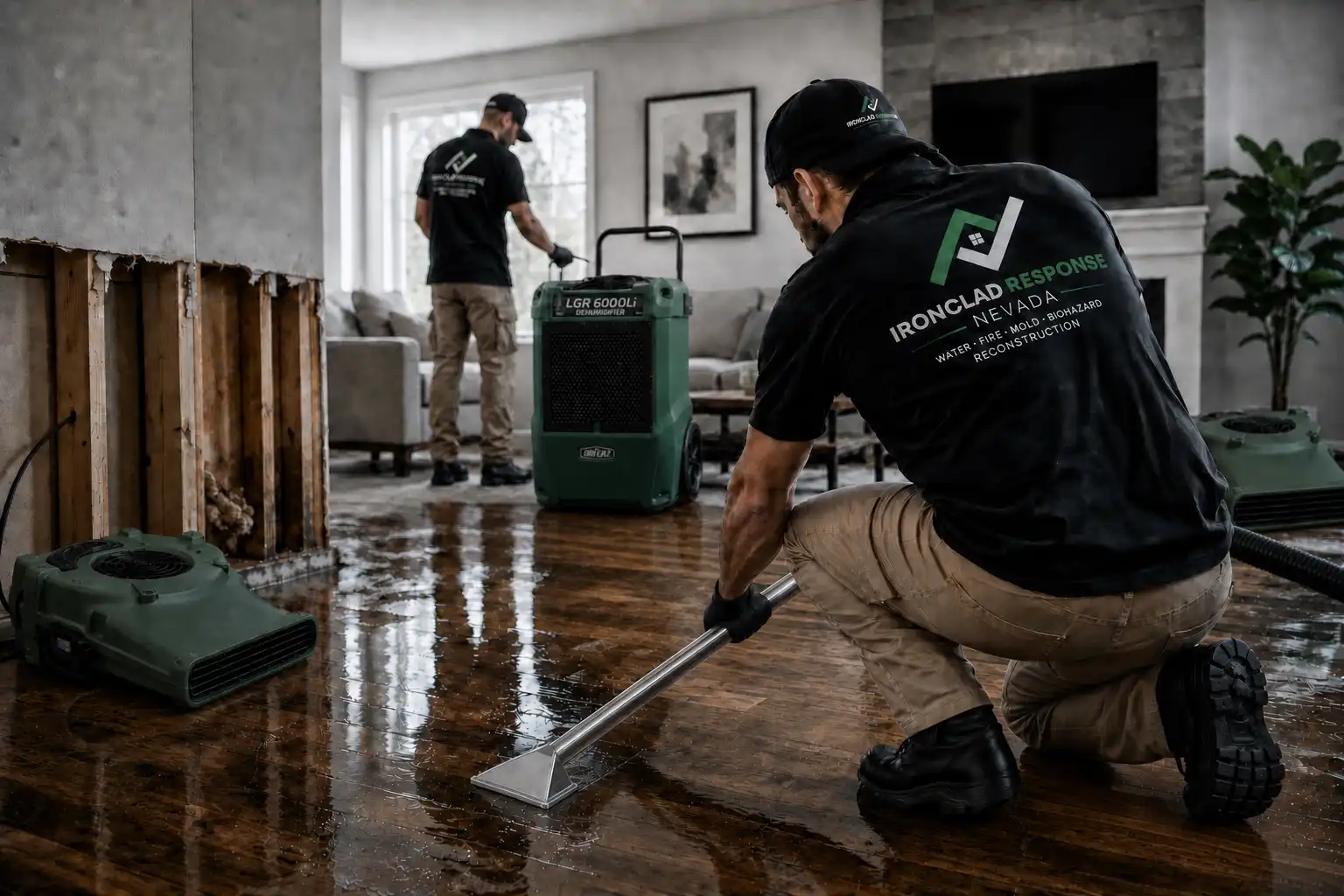
A water leak in your Las Vegas home can go from minor inconvenience to serious structural problem faster than most homeowners expect. The desert climate creates a false sense of security, making it easy to assume that because the air is dry, the moisture will simply evaporate on its own. But what happens inside your walls, under your floors, and in your crawl spaces tells a very different story.
Whether you’re dealing with a burst pipe, a slow leak that went unnoticed, or flooding from an unexpected storm, the steps you take immediately after discovering water damage can mean the difference between a straightforward restoration and a costly, drawn-out repair process.
Why Las Vegas Properties Face Unique Water Damage Risks
Las Vegas sits in one of the driest climates in the country, which ironically creates some specific vulnerabilities that homeowners should understand.
Homes in Clark County tend to have older plumbing infrastructure in established neighborhoods like Henderson and North Las Vegas, where pipes have been exposed to decades of temperature extremes. Summer heat in the Las Vegas Valley regularly pushes above 110°F, which can accelerate material fatigue in supply lines, connections, and water heaters. Monsoon season, typically from July through September, also brings intense, fast-moving storms that overwhelm drainage systems and introduce water through areas of the home that may have gone untested for years.
Working in homes across Clark County, restoration professionals commonly see water intrusion events that homeowners initially dismiss as minor, only to discover that moisture had already spread through drywall, insulation, and subfloor materials well before anyone noticed visible signs.
What to Do Immediately After Discovering a Leak
Time is the single most important factor in water damage restoration. Here is what should happen in the first moments after you find a leak:
1. Stop the source if it is safe to do so. Locate your main water shutoff and turn it off. If the leak is from a specific fixture or appliance, shut off the supply valve directly. Do not enter standing water if there is any possibility of electrical hazard.
2. Document the damage. Before moving anything, take photos and videos of the affected areas. This is important for insurance purposes and helps restoration professionals assess the full scope of the damage when they arrive.
3. Move valuables and belongings out of affected areas. Remove furniture, rugs, electronics, and personal items from wet areas where possible. This reduces further damage and gives the restoration team room to work.
4. Contact a professional restoration company. Do not wait to see if the water dries on its own. By the time visible moisture disappears, hidden moisture may already be promoting mold growth or compromising structural materials.
The Hidden Danger: What Water Does Behind Your Walls
One of the most misunderstood aspects of water damage is that the problem rarely stays where you can see it. Water follows the path of least resistance and will move through building materials quickly.
In Las Vegas homes, common pathways for hidden moisture spread include:
- Drywall and insulation – Both materials absorb water rapidly and retain moisture long after the surface appears dry
- Hardwood and laminate flooring – Water migrates beneath the surface, causing warping, buckling, and subfloor deterioration
- Cabinetry and wall cavities – Kitchen and bathroom leaks often travel inside walls for extended periods before becoming visible
- Concrete slab foundations – Many Clark County homes are built on slab foundations, which can trap moisture underneath flooring systems
This is why professional moisture detection and monitoring is a critical part of the restoration process, not just water removal. Advanced moisture meters and thermal imaging allow technicians to identify exactly where moisture has traveled and confirm that drying is complete before any reconstruction begins.
What Professional Water Damage Restoration Looks Like
When a trained restoration team arrives at your property, the process is systematic and guided by industry standards set by the IICRC, the certifying body for restoration professionals.
Water Extraction
The first step is removing standing water as quickly as possible using commercial-grade extraction equipment. This is not comparable to consumer wet-dry vacuums. Professional water extraction equipment removes hundreds of gallons per hour and is designed to work on multiple surface types including carpet, hardwood, tile, and concrete.
Applied Structural Drying and Dehumidification
Once the bulk water is removed, the focus shifts to drying the structure itself. Applied structural drying and dehumidification uses industrial air movers and dehumidifiers to pull moisture out of materials at a rate that ambient air cannot achieve. In the Las Vegas climate, outdoor humidity levels can help accelerate drying, but interior moisture trapped in building materials requires controlled drying conditions to prevent mold from taking hold.
Moisture Monitoring
Drying is not complete when surfaces feel dry to the touch. Technicians take moisture readings throughout the drying process to verify that materials have reached acceptable moisture content levels. Documentation of these readings is important for insurance claims and quality assurance.
Mold Prevention
One issue professionals frequently encounter in water-damaged Las Vegas homes is mold growth that develops within 24 to 48 hours of a moisture event. Clark County’s warm temperatures create ideal conditions for rapid mold colonization. If mold is identified or suspected during the restoration process, mold remediation should be addressed before reconstruction begins.
Dealing With Insurance After Water Damage
Most homeowner’s insurance policies cover sudden and accidental water damage, but the documentation process matters. When you contact a restoration company quickly and they provide a detailed assessment, scope of work, and moisture logs, it creates a clear record that supports your claim.
A few important points to know:
- Insurance typically covers sudden events like a burst pipe but may not cover gradual leaks that developed over time due to lack of maintenance
- Some policies include coverage for mold remediation if mold results from a covered water event
- Working with a restoration company that communicates directly with your insurance provider can reduce delays and disputes during the claims process
At Ironclad Response, we work alongside homeowners throughout the documentation and insurance coordination process to help reduce the administrative burden during what is already a stressful time.
Protecting Your Las Vegas Home From Future Water Damage
Based on what professionals commonly see during service calls throughout Clark County, some of the most preventable water damage events come down to deferred maintenance and overlooked warning signs.
Proactive steps homeowners can take include:
- Having water heaters inspected regularly, particularly units over 8 to 10 years old
- Checking washing machine supply hoses for signs of wear or bulging
- Inspecting roof penetrations and flashings before and after monsoon season
- Monitoring water bills for unexplained increases, which can indicate a hidden leak
- Ensuring proper grading around the foundation to direct stormwater away from the home
If your property has experienced water damage from a storm, consider a professional assessment of your drainage system and roof integrity, as these are common entry points during Clark County’s intense summer storms.
When Speed Makes All the Difference in Las Vegas
Water damage does not improve with time. Every hour that moisture remains in building materials increases the risk of mold growth, structural deterioration, and more expensive repairs. In a city where temperatures regularly exceed 100°F, the warm indoor environment accelerates microbial growth faster than in cooler climates.
Ironclad Response provides 24/7 emergency damage restoration services throughout Clark County, including water damage restoration, flood response, and sewage cleanup and sanitization when contaminated water is involved. As a locally owned company with over a decade of experience serving Southern Nevada, our team understands how water behaves in Las Vegas homes and what it takes to restore them properly.
If you have discovered a leak or suspect hidden water damage in your property, the best step you can take right now is to call a certified professional before the problem grows.