



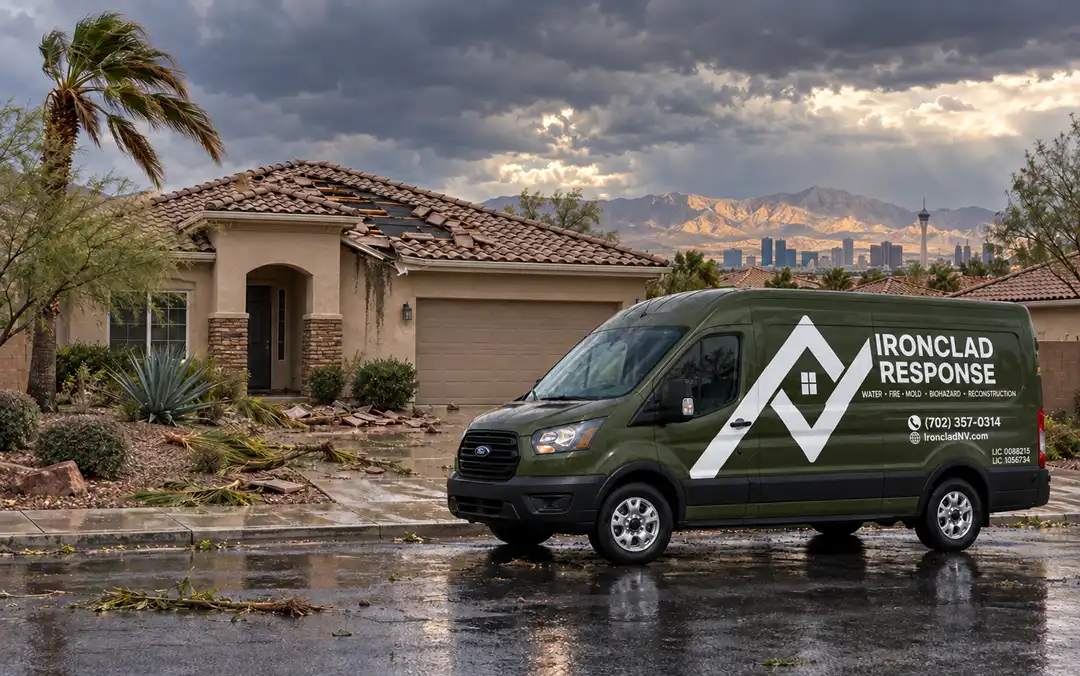
North Las Vegas takes some of the most underestimated weather punishment in Southern Nevada. While the city shares the same desert climate as the rest of the Las Vegas Valley, its position at the northern edge of the metro area exposes properties to wind corridors and storm cells that can move through quickly and leave behind significant damage before residents fully register what happened.
The problem with storm damage is that the most consequential effects are often the least obvious. A homeowner might walk outside after a monsoon storm, see no broken windows or fallen trees, and assume the property came through fine. Meanwhile, wind-lifted roof flashing, compromised fascia, fractured roof tiles, and driven moisture inside wall assemblies are already setting the stage for water intrusion and structural deterioration.
Knowing what to look for after a storm is one of the most practical skills a North Las Vegas property owner can have.
How North Las Vegas Storms Create Property Damage
The storm profile in North Las Vegas is distinct from what most people picture when they think of storm damage. This is not a region that sees frequent hurricanes or nor’easters. What it does see are fast-moving thunderstorm complexes during the July through September monsoon season, dust storms called haboobs that carry enough force to strip surface materials and deposit debris, and occasional winter wind events that catch homeowners off guard after months of calm weather.
These storm types share a common characteristic: they are intense, brief, and capable of producing localized damage that varies significantly from one block to the next. A storm that causes minimal issues on one street can leave serious damage on a neighboring property depending on roof orientation, tree coverage, and building age.
In service calls across North Las Vegas neighborhoods including Aliante, Eldorado, and the older established sections near Craig Road, restoration professionals frequently encounter damage that was present for days or weeks before the homeowner realized the scope of the problem. By then, water had already worked its way into the structure.
Roof Damage: The Most Common and Most Overlooked
The roof is the first line of defense against every storm North Las Vegas produces, and it is also the area where damage is most likely to go undetected because most homeowners simply do not go up there after every weather event.
Missing, Cracked, or Displaced Roofing Materials
After any significant wind event, the condition of your roofing surface deserves attention. For tile roofs, which are common throughout North Las Vegas, individual tiles can crack, shift, or lift without being removed entirely. A tile that has moved even slightly out of alignment creates an opening for water to enter the underlayment system.
For flat or low-slope roofs, which appear on many commercial properties and some residential structures in the area, wind can create uplift forces that separate roofing membranes at seams and edges, even when the surface looks intact from ground level.
Signs of potential roof damage visible from the ground include:
- Visible gaps, lifted edges, or displaced tiles along ridgelines
- Granule accumulation in gutters or downspout discharge areas following a storm
- Dented, bent, or separated metal flashing at roof edges, chimneys, and penetrations
- Sagging or uneven roofline sections that were not present before the storm
- Debris impact marks visible on roofing surfaces
Gutter and Fascia Damage
Gutters and fascia take direct hits during hail events and can be compromised by debris impact and wind load in ways that affect their ability to channel water away from the structure. Bent, separated, or detached gutters allow water to run directly down exterior walls and pool at the foundation, which introduces moisture intrusion risks that are separate from the roof itself.
Exterior Wall and Siding Damage
North Las Vegas properties built over the past few decades predominantly feature stucco exteriors, which hold up reasonably well to normal conditions but can develop cracks and impact damage during severe storms. Wind-driven debris is a particular concern during haboob events, where sand, gravel, and larger material can travel at significant velocity.
After a major storm, exterior walls should be inspected for:
- New cracks in stucco surfaces, particularly diagonal cracks at window and door corners, which can indicate both impact damage and wind-induced structural movement
- Chipped or missing sections where debris impact has removed surface material
- Discoloration patterns that suggest water is running down the wall and absorbing into the substrate rather than shedding cleanly
- Separation at caulked joints around windows, doors, and utility penetrations, which can develop or worsen during temperature swings that accompany storm events
Even small breaches in an exterior wall system become meaningful water entry points during the heavy rain that accompanies monsoon storms. A crack that seems cosmetic in dry conditions can allow significant water intrusion when rain is wind-driven against the wall surface.
Window and Door Frame Damage
Windows and doors represent the most vulnerable penetrations in any building envelope, and storm events put them under concentrated stress. Beyond broken glass, which is an obvious indicator, there are subtler signs of storm impact that warrant attention.
Inspect window and door frames for:
- Visible gaps between the frame and surrounding wall material
- Difficulty opening or closing that was not present before the storm, which can suggest frame distortion from wind pressure or debris impact
- Water staining along interior window sills or door thresholds following rainfall
- Cracked or separated exterior caulking around frame perimeters
Water that enters through compromised window and door assemblies typically travels into wall cavities and accumulates at the base of the opening, where it can remain hidden while promoting mold growth and deteriorating wood framing.
Interior Signs That Storm Damage Has Already Caused Water Intrusion
By the time storm damage produces interior symptoms, moisture has typically been present for at least several hours, sometimes longer. These signs should be treated as urgent indicators requiring professional assessment.
Ceiling Stains and Discoloration
New water staining on ceilings following a storm event is one of the clearest indicators that the roof or upper wall system has been compromised. The stain’s location does not always correspond directly to the point of entry, as water travels along framing, insulation, and sheathing before dropping. A stain appearing in the middle of a room may indicate a roof penetration several feet away.
Bubbling or Peeling Paint
Paint that begins to bubble or peel on interior walls or ceilings within days of a storm is showing the effects of trapped moisture behind the surface. This response can occur quickly in North Las Vegas homes because warm indoor temperatures accelerate the interaction between moisture and wall materials.
Dampness, Soft Spots, or Warping
Any soft or spongy feeling underfoot near exterior walls, or warping in hardwood flooring, laminate, or baseboards, suggests that water has reached floor-level materials. This typically indicates a more advanced intrusion that warrants immediate water damage restoration response.
Musty Odors After the Storm Passes
A new musty odor that develops in the days following a storm indicates that moisture is present somewhere in the structure and microbial activity has begun. Given that mold can establish within 24 to 48 hours under warm conditions, post-storm musty odors should never be attributed to the storm simply passing through. A professional moisture assessment is the appropriate response.
Flood and Drainage Damage on the Property
North Las Vegas experiences flash flooding during intense monsoon rain events, particularly in lower-lying areas and neighborhoods with aging drainage infrastructure. Water that accumulates around the foundation, enters through garage floors, or backs up through floor drains introduces a different category of damage than roof-based water intrusion.
Flood-related storm damage signs include:
- Silt or debris deposits on garage floors, patios, or along the base of exterior walls indicating water flow
- Soil erosion or displacement around the foundation perimeter
- Moisture or standing water in crawl spaces, utility areas, or low-lying rooms
- Rust or waterline marks on HVAC equipment, water heaters, or other mechanical systems located at or near grade level
Water that enters from the ground level during flooding carries contaminants that make professional flood damage restoration and sanitation necessary rather than optional. This is not cleanup that can be safely handled with standard consumer tools and household cleaners.
What to Do After Spotting Storm Damage
The most important action after identifying potential storm damage is to document everything before conditions change or temporary repairs alter the evidence. Photograph all visible damage from multiple angles, note the date of the storm event, and avoid making permanent repairs until a professional assessment has been completed and insurance documentation is in order.
Avoid entering areas where structural damage is suspected, and keep family members and pets away from rooms where ceiling damage suggests active water intrusion above.
Professional storm damage restoration begins with a thorough inspection that goes beyond what is visible on the surface. Moisture meters, thermal imaging, and structural assessment allow technicians to understand the full scope of water intrusion and identify all areas that need to be addressed before reconstruction.
Responding to North Las Vegas Storm Damage Before It Compounds
Ironclad Response provides 24/7 emergency storm damage restoration throughout North Las Vegas and Clark County, including wind and hail damage restoration and comprehensive emergency damage restoration services for both residential and commercial properties.
As a locally owned company with more than a decade of experience serving Southern Nevada, we understand the specific storm patterns that affect North Las Vegas properties and what thorough restoration in this climate actually requires. When storm damage is caught early and addressed properly, the scope of repair stays manageable. When it is missed or delayed, what started as a roof issue becomes a water damage problem, and what started as a water damage problem can become a mold situation.
The sooner damage is identified and professionally assessed, the better the outcome for the property and the people inside it.